
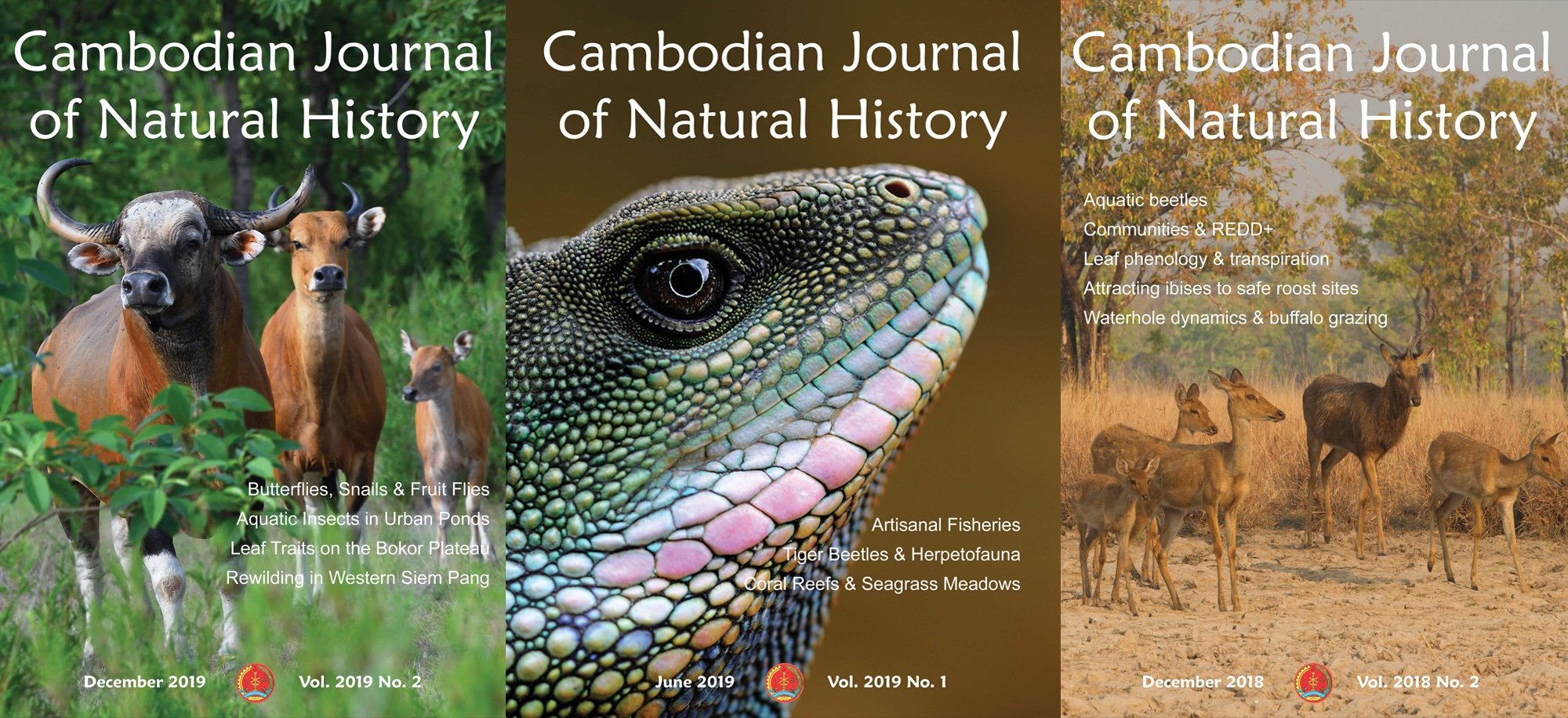
Cambodian Journal of Natural History
CAMBODIA'S FIRST PEER-REVIEWED SCIENTIFIC JOURNAL
The Cambodian Journal of Natural History (ISSN 2226–969X), Cambodia’s first peer-reviewed scientific journal, was launched in 2008 by the Royal University of Phnom Penh (RUPP) and Fauna & Flora. Today, the journal is co-published by the RUPP and Cambodia Wildlife Care, a non-profit organisation founded with the aim of protecting Cambodia’s wildlife and forests.
Aimed at helping Cambodian scientists to share their findings and improve their writing skills, the journal is open access and addresses the critical need for information on the conservation status and management requirements of Cambodian biodiversity.
All papers are peer-reviewed by leading national and international scientists and published in English. Many of the journal’s authors are early-career researchers with little experience of writing scientific papers, and our editors gently coach novice authors to develop their analysis and presentation.
Young scientists are thus gaining valuable new skills and confidence to write up their work, while distinguished veterans can use the journal to ensure their findings reach a wide audience in Cambodia.
Unlike many peer-reviewed journals, the CJNH does not charge reader or author fees as it relies entirely on the generosity of sponsors for publication and distribution to ensure as many people as possible have open access.
The journal is published biannually in June and December each year by the Centre for Biodiversity Conservation (CBC) at the Royal University of Phnom Penh. The CBC is a non-profit making unit dedicated to training Cambodian biologists and the study and conservation of Cambodia’s biodiversity.
PURPOSE AND SCOPE OF THE JOURNAL
The Cambodian Journal of Natural History publishes original work by Cambodian and foreign scientists on all aspects of Cambodian natural history, including the status and ecology of species and habitats, new records, range extensions and checklists for species, landscape ecology, conservation policies and management plans, and human use of natural resources. The journal accepts original work by:
Cambodian and foreign scientists on any aspect of Cambodian natural history
Cambodian scientists on natural history studies in any part of the world
The journal especially welcomes material that enhances understanding of conservation needs and has the potential to contribute to conservation management in Cambodia.
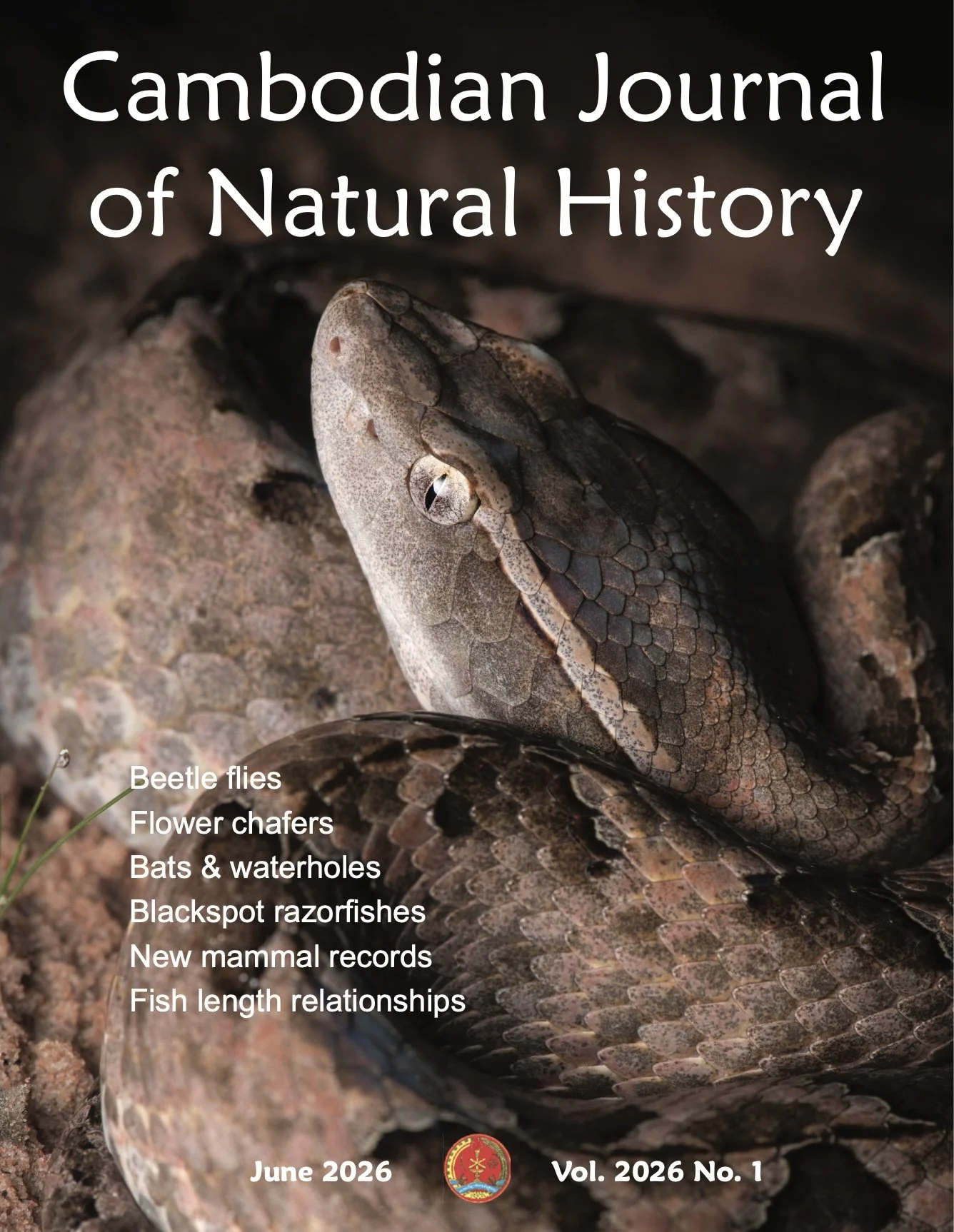
For more information about the CJNH, how to contribute and download the latest issue, please visit the RUPP website or click on the cover image below:
“Founded in 2008, the Cambodian Journal of Natural History has played an important role in publishing peer-reviewed research by Cambodian and foreign researchers on the kingdom’s poorly known ecosystems, fauna and flora. It has also raised of visibility of conservation science in Cambodia.
Without the CJNH, many of the field research and conservation projects occurring in Cambodia would remain unseen and known only to the teams implementing them. There would be limited exchange of experience and information, both within Cambodia and internationally.
In a world under constant pressure from economic interests, urban expansion, wildlife trade, deforestation and climate change, undertaking and publishing research on the effects of contemporary events on the natural world is essential. If we wish to protect and manage Cambodia’s wildlife and ecosystems, we must first understand them so that effective actions can be undertaken.
The CJNH has helped to pave the way in this regard and played a major role in documenting the composition, ecology and conservation needs of Cambodia’s diverse ecosystems and wildlife and it provides a reliable source of scientific information for Cambodian and foreign conservationists and government officials alike.
Cambodia Wildlife Care congratulates Fauna & Flora for their part in developing the journal and is delighted to partner with the Royal University of Phnom Penh as co-publisher of the CJNH so that it can continue delivering the important service it has provided to conservation science in Cambodia for the past 18 years.”
- Nick Marx, Cambodia Wildlife Care.